
On Your Data Collection Day
You'll spend about a day with us at our offices in Christchurch. When you arrive, you'll be welcomed by someone from our team you'll get to know. We'll talk through what the day involves before anything begins. Then, at your own pace:
- We have a kōrero about your life since we last spoke, work, whānau, health, how you're going.
- You'll respond to questions that you've likely answered previously, and we'll ask again to see how things have changed.
- We'll take some simple health measurements, things like blood pressure, vision, and a small blood sample.
- There's time for breaks, kai, and a cup of tea whenever you need it.
You're in charge of the day. You can skip any question, take a break, or stop any time. We'll never share what you tell us with your GP, your family, or anyone else without your permission.
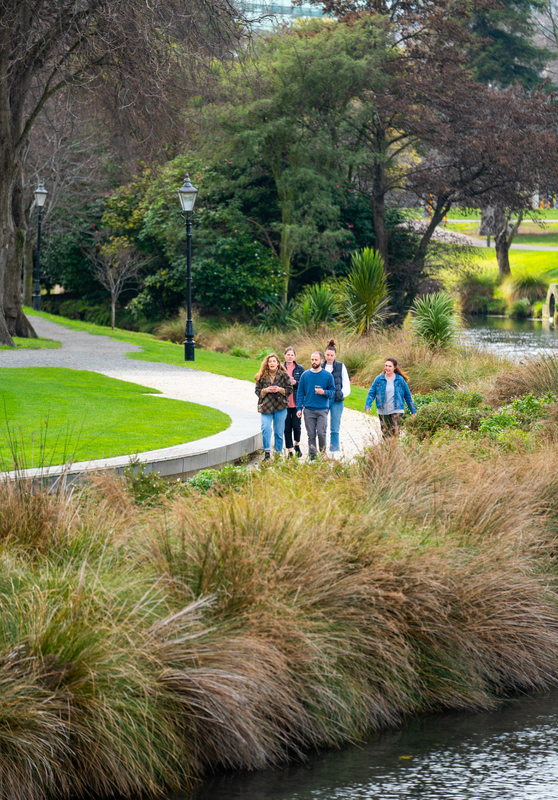
What Your Data Collection Day Looks Like
- We wanted to share ahead of time what to expect on your Data Collection Day with us. This page has laid out the whole day laid out, in order, the way you'll experience it.
- Each step in the timeline below opens up when you click it, with a fuller description of what's involved, how long it takes, and what your choices are. Some Study Members like to read every part in detail; others prefer to scan the headings and only open the parts they're curious or unsure about. Please use this page however and whenever it suits you.
- One thing to remember as you read: the order and timings are indicative, not absolute. You can take a break at any point, skip any part you'd rather not do, or stop entirely, without giving a reason and without it affecting anything else.
-
🗓️Before the Data Collection Day⏳
We will be in touch with you to arrange booking your day to visit with us, along with transport arrangements, schedule adaptations, and information about your Data Collection Day.
Once you've said yes to a visit, you won't need to do much - we do the planning. Before your Data Collection Day visit, we'll send you information via whichever method works for you (email, post). The pack includes a confirmation of your date and time, a map and directions to our office, the participant information sheet to read at your own pace, and contact details for the team member who'll be looking after you on the day.
There's nothing to fill in beforehand. You don't need to prepare answers to anything, look up old records, or remember dates. The questions we ask are designed to be answered the way they come to you. There are no right or wrong answers, and "I'm not sure" is a perfectly good response.
A few small things that help on the day:- Wear something you're comfortable sitting in for a while (the health checks don't require any change of clothes),
- Bring your usual glasses if you wear them for reading,
- Let us know in advance if you have any access needs, dietary requirements, or anything else we should know to make the day easier. A simple email or phone call is enough.
If something comes up and you need to change your date, for any reason (e.g., work, family, health), please tell us as soon as you know. Rescheduling is easy and there's no need to explain why you need to reschedule.
-
🛣️Getting to Us🚕
We'll help you get here, wherever you are.
Our office is in central Christchurch, and most Study Members will travel to us locally.
- If you're driving, there's parking nearby and we'll send you the details and any parking permits or vouchers you need with your information pack.
- If you're coming by bus, the closest bus stops are within a short walk, and we'll include directions tailored to your route.
- If you live elsewhere in Aotearoa, we cover the cost of getting to Christchurch and back. That includes flights, travel to and from the airport, and a night's accommodation if your visit means an early start or late finish. We work with a small number of central Christchurch hotels and book everything for you. You don't need to lay out money and claim it back.
- If you live overseas, we'd still love to see you. We've welcomed Study Members back from Australia, the UK, the US, and further afield, and we'll work through the travel logistics with you one to one. The principle is the same: we cover the cost of being part of the study; you cover the rest of your trip.
- If getting to our office isn't possible, let's discuss this. Whether it be for health reasons, mobility, or because the timing genuinely won't work, let's talk. We have remote options for parts of the questionnaires. Our offices are wheelchair accessible, and if you have other access needs (sensory, neurodivergence-related, anxiety about unfamiliar buildings) please tell us in advance and we'll figure out how to make the day work for you.
-
🛎️When You Arrive👋🏼
A warm hello, a cuppa, and a chat about the day before anything begins.
When you come through our doors, we'll be expecting you by name.
The team member who's been your main point of contact will come and greet you, take your coat, and put the kettle on.
We've designed the first part of your day as a conversation, not a process. Over a cuppa, we'll walk you through what the day involves, including what we'll ask, what we'll measure, what happens to your information, and what your choices are. You'll have the information sheet to read at your own pace and to take home if you'd like (which you'll have received before the day). By the end of this kōrero, you'll know exactly what you're saying yes to, and what you can say no to. Saying yes to one thing isn't saying yes to everything, and you can change your mind about any of it at any point during the day.
The space we'll be in together is a quiet, private room, more like a comfortable sitting room than a clinic. Your bag stays with you. Your phone stays yours. Tea, coffee, water and a few snacks are on hand all day. If someone has come along to support you, we'll discuss with you what level of involvement your support person will have and we'll cover any limits (e.g., proximity to you when going through assessments).If you have any questions, doubts, or if anything is unclear - let us know, whenever. Ask us anything; there's no question too small or too off-topic. We are here to answer your queries at any point.
-
🧠Thinking, Memory & Attention💭
About 30 minutes of memory, attention and problem-solving tasks, done early in your Data Collection Day.
The first activity of the day is a set of short cognitive tasks, things like remembering lists of words, repeating patterns, solving simple puzzles, and timed exercises that test attention and reaction speed. We do this part of the day early because it's the bit where being attentive to content matters most. The whole session takes about 30 to 35 minutes.
The tasks aren't a test in the school sense. There's nothing to prepare for, nothing to study, and the tasks are designed so that no one finishes all of them perfectly. That's by design, and it's how the tasks work. What we're learning about is patterns across the cohort over time, not how any one person performs on any one task.
The interviewer running this session has been trained and is supervised by a clinical neuropsychologist. They'll explain each task before you start it, give you a chance to practise where that's useful, and pace the session around you. If you need a break, just say. If a task feels frustrating or you're not sure you're "doing it right," that's normal and expected. It's important to keep going as best you can, and the interviewer will reassure you.
Many Study Members tell us afterwards that the tasks were more interesting than they expected, and a few of them are quite fun. -
🍵Morning Tea Break🍎
A proper break, with kai and a cup of tea.
After the cognitive tasks, we stop for a real break, for about 15 minutes. The break is yours, you'll be welcomed to step outside for fresh air, scroll your phone, take a call, sit quietly, or chat with us. There's no expectation either way.
Tea, coffee, water, and kai options are available, and we'll have asked you in advance about anything you need.
The cognitive tasks can be tiring in a way that surprises people, so we genuinely encourage you to take this break properly rather than push through. -
❓Questions about Life, Family, & More📋
A conversation about your life, work, whānau and how you're going.
The longest single part of your day is the interview, which runs from late morning until lunch. You'll sit with one of our trained interviewers, and we'll work through a series of questions about your life since we last spoke. Some of the questions or topics will be familiar from previous waves, because we want to see how things change over time. Others are new, shaped by what Study Members like you have told us matters at this stage of life.
The topics include: where you're living and who's around you, work and study, money and how you're managing, your physical health and mental health, sleep, how you spend your time, and life events that have shaped you. We also ask about more personal things — relationships, substance use, difficult experiences, and at times in your life when things have been hard. For women, the interview also covers reproductive and menopausal health, including symptoms, sleep, and how things have been changing. We ask about sleep with everyone, regardless of gender, because it matters at this age.
Some of the questions are personal, and we ask them gently. You can skip any question without giving a reason, take a break whenever you need one, or stop the interview entirely. None of those choices affect anything else about your day or your relationship with the study. The interviewer's job is as much to support you as to ask the questions.
We'll also build in a few short standing-and-moving moments during the interview, measures of grip strength, balance, and a "sit-to-stand" test - partly because they're useful health measures, and partly because they're a good excuse to stretch your legs between topics. There's also a quick smell-identification check, which most people find more amusing than anything else.
Most people find the interview easier than they expected. Many tell us afterwards it was the first time they'd really stopped and thought about how the last few years had gone. -
🥪Lunch Break🥤
A proper sit-down break, no rush, kai provided.
- Lunch is provided and it's a proper sit-down break, for about 45 minutes. We'll have asked in advance about dietary requirements and preferences, and we make sure there's something for you, such as vegetarian, vegan, or gluten-free.
- You can eat with us and have a chat, or take yourself off somewhere quiet, either is fine.
- The afternoon involves moving to a different building and some physical health checks, so it's a good moment to genuinely rest and refuel.
-
➡️Head to the Nicholls Centre👟
A short walk to our partner centre for the physical health checks.
- For the afternoon's physical health checks, we move from our offices to the Nicholls Centre, which is very close by. It's a few minutes' walk.
- The Nicholls Centre is the home of the Christchurch Heart Institute and is a specialised research facility. The team there has been working with us on this wave from the beginning, and the staff who'll do your assessments are clinical staff who do this every day. We'll walk over with you, introduce you to the team, and stay nearby for the rest of the afternoon - you won't be on your own at any point.
- The change of scene also acts as a natural transition between the talking part of the day and the physical-checks part of the day.
-
💪🏼Physical Health Checks💓
Heart, eyes, blood and basic measurements, done gently and explained as we go.
The afternoon at the Nicholls Centre covers several physical health checks. None of them require you to change clothes, and none of them are uncomfortable. Before each one, the staff member doing the check will explain what it is, what it measures, and what it'll feel like. You can ask questions, and you can opt out of any individual check without affecting any of the others.
Heart & Basic Measurements:
- This includes your blood pressure (a cuff on your upper arm), your height, weight, and waist and hip measurements, and an electrocardiogram or ECG — a quick recording of your heart's electrical activity, taken with small sticky pads on your chest, arms and legs. The ECG itself takes a few minutes and you don't feel anything; it's just listening, not doing anything to you. We'll also do a body composition measurement that estimates how much of your weight is muscle, fat, bone and water — it's a quick, painless check you stand on, similar to a set of scales.
Eye Health Check:
- We take photos of the back of your eyes — your retinas — using a specialised camera. The room is darkened to get the clearest images, and the whole eye check takes about 20 minutes. You don't need eye drops, the camera doesn't touch your eye, and there's nothing to do except sit still and look where the staff member asks you to. The flash can be a little bright but it's brief.
Blood Sample:
- We take a blood sample from a vein in your arm. This is the same way a sample would be taken at a GP or clinic. We use a small needle, and the actual sample takes about a minute. We need a reasonable amount of blood (up to about 100 ml, which is roughly half a small cup) because the sample is used for many different research measures, but it's well within the safe range and you'll be offered a snack and a drink afterwards. Tell us in advance if you'd like to be lying down, looking away, or have someone with you. If you find blood draws difficult, we have ways to make it easier — just say.
Urine Sample:
- At some point during the day you'll be asked to provide a small urine sample (about 30 ml, in a pre-labelled pottle). The pottle is given to you at the start of the day so you can do it whenever suits you.
You'll be given a Bowel Screening Kit to take home:
- The Bowel Screening kit includes everything you need to collect a small sample in private, at home, in your own time, plus clear instructions and a pre-paid envelope to send it back. The kit covers two screening checks, one looks for tiny traces of blood that can be an early sign of bowel changes, and the other looks at the natural mix of bacteria in your gut, which is an area of growing research interest. The kits are designed to be straightforward and discreet.
If any of the afternoon's checks turn up something we think your GP should know about, we'll let you know, talk you through what it means, and ask whether you'd like us to share the result with your GP. Nothing goes to anyone without your say-so. For most people, the afternoon is a useful midlife snapshot of how their body is doing.
-
☕Afternoon Tea Break⚡
We'll return to our offices for a proper rest after the afternoon's physical checks.
Once the checks at the Nicholls Centre are done, we walk back to our offices together for afternoon tea. It's another real break, kai, drinks, and a sit-down, and a chance to decompress before the last part of the day.
The afternoon's checks can leave people feeling a bit tired or hungry, especially after the blood sample, so this break is genuinely about rest. -
📝Final Questions & Discussion👥
A chance to ask anything that's come up, and check in on how the day went.
The final part of the day is a quieter conversation. We'll check in on how the day went, and give you space for any questions that have come up.
This is also when we go through what happens next: when you'll hear from us again, what we do with your information, how to get in touch if anything occurs to you after you've left, and how we'll let you or your GP know if any of today's checks need follow-up.We'll go through the bowel screening kit instructions with you again so you've got everything you need to do it at home in your own time.
If anything has come up during the day that's left you feeling unsettled, a memory, a difficult topic, a feeling you didn't expect, please tell us before you go. We can sit with you, talk it through, give you the contact details for free support services in Aotearoa, and check in with you in the days after. You're never alone with what gets raised on a day like this. -
👋🏼Wrap Up & Farewell🍃
A thank-you koha and ka kite, with the day ending at 4:30pm.
We finish the day the way we started it, sitting down together. We'll thank you properly, and you'll receive a koha from us as a thank-you for your time and the trust you've placed in us.
Before you go, we'll make sure you know who to contact if you have any feedback or questions about how the day went, that you're aware of how we'll be in touch if any of the day's checks need follow-up, and that you've got transport home sorted, if anything's changed since the morning, just say.
The intention is that your day will finish around 4:00pm and you'll be on your way by 4:30pm. We'll see you off at the door. In the months that follow we'll be in touch with a thank-you note and updates on what your contribution is helping us learn, because the work doesn't end when you walk out, and neither does our gratitude.
What Happens After Your Data Collection Day?
The day itself is one part of a much longer kaupapa. Once your visit is done, our team's work continues, with tasks such as checking your data, processing your samples, following up on anything that needs to go to your GP, and combining what we've learned from you with what we learn from every other Study Member.
Gathering data with the whole cohort takes time. We expect this wave to take 18 months to 2 years (maybe more) from the first Study Member to visit us for Data Collection, to the last Study Member visit, and we'll be working steadily across that whole period.
While that's happening, we'll keep in touch. You'll hear from us with a thank-you note in the weeks after your visit, occasional updates on how the wave is going, and summaries of what your contribution is helping us understand. We won't flood your inbox; we know you have a life. But we won't disappear either.
If anything occurs to you after you've left our office, maybe a question, a concern, a memory you'd like to add to something you said, or just a wish to chat, please get in touch. There's no expiry on that. The relationship between you and CHDS doesn't end at 4:00pm on the day of your visit. It carries on for as long as you'd like it to.